Enforced disappearances in Crimea
Grey BeesEnforced disappearances in Crimea are presented through the case of Akhtem Mustafayev, whose family is left for twenty months without knowing where he is or whether he is alive. His disappearance is not resolved by an official investigation or a clear account of responsibility: information comes piecemeal from witnesses and officials, while the uncertainty weighs on his wife, Aisylu, and eventually becomes a reason for Sergey Sergeyich to seek answers. The later discovery of Akhtem’s body confirms his death, but does not undo the period in which his family had to live without confirmation.
The Disappearance and the Family’s Uncertainty
When Sergey Sergeyich visits Aisylu, she tells him that Akhtem is gone and that he was taken twenty months earlier. Asked whether the police searched for him, she describes how three men disappeared after travelling together by car to a mosque in Bakhchisaray. Their car was left empty. A little boy had seen the men being forced into a minibus, but the family had heard nothing further. Aisylu says that the Cossacks took them and speculates that they may have been sent to Russia; neither the men’s destination nor their fate is established at this point.
The disappearance is thus marked by a sharp division between what can be recounted and what remains unknown. The family has a last known journey, an abandoned vehicle, and a child’s account of the men being taken, but no confirmed location or official explanation. Aisylu’s account also places Akhtem’s case among others: three people were taken that day, and their families received no word afterward. The missing men’s absence is not an isolated uncertainty for her household, but part of a broader pattern of unresolved cases.
Official Evasion and the Word “Widow”
Sergey Sergeyich later asks Ivan Fyodorovich, an FSB official, about Akhtem. Ivan tells him to stay in Russia for no longer than ninety days and says that Aisylu should speak to the police. He attributes responsibility to either the Crimean Self-Defence forces or the Cossacks, adding that the matter is outside his office’s hands. His response offers neither a finding nor a path to an answer beyond referring the family elsewhere.
The phrase that stays with Sergey Sergeyich is Ivan’s instruction to tell Akhtem’s “widow” to go to the police. Sergey Sergeyich asks whether Aisylu is therefore a widow. Ivan says he misspoke, points out that the case is not closed, and notes that the police have at least two dozen such cases. The correction does not settle the matter: the official’s choice of word has exposed an assumption about Akhtem’s fate, then withdrawn it without explaining why. The case is simultaneously described as open and treated, in the same conversation, as though its outcome were known.
Delayed Recognition
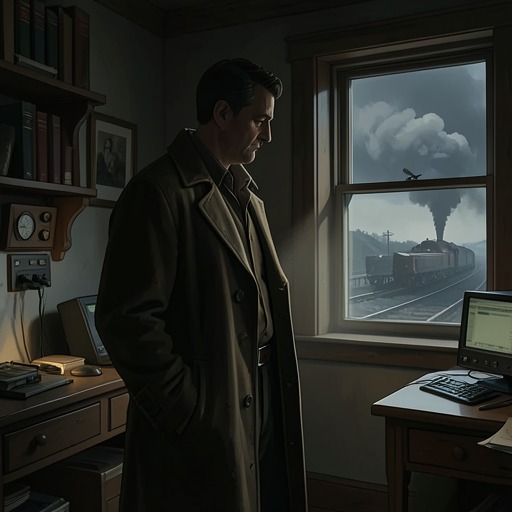
That night, Sergey Sergeyich cannot sleep. He returns in thought to the official’s slip and, for the first time, believes that Akhtem is no longer alive. He reasons that if the abductors had left Akhtem’s four-wheel-drive vehicle behind, they wanted his life rather than his car or money; if Akhtem had survived, Sergey Sergeyich thinks, he would have found some way to let his family know. These are Sergey Sergeyich’s deductions, not information confirmed by an investigation, but they change how he understands the prolonged silence.
His concern shifts from Akhtem, whom he barely remembers as the fellow beekeeper he knew twenty years earlier, to Aisylu and her children. The narrative gives the uncertainty a domestic duration: after the conversation, Sergey Sergeyich lies awake in his cramped tent, remembers the extinguished church candle, and eventually sleeps from exhaustion. The missing person’s fate is still unconfirmed, yet the consequences of not knowing have already entered the lives of those waiting for him.
Discovery and Return
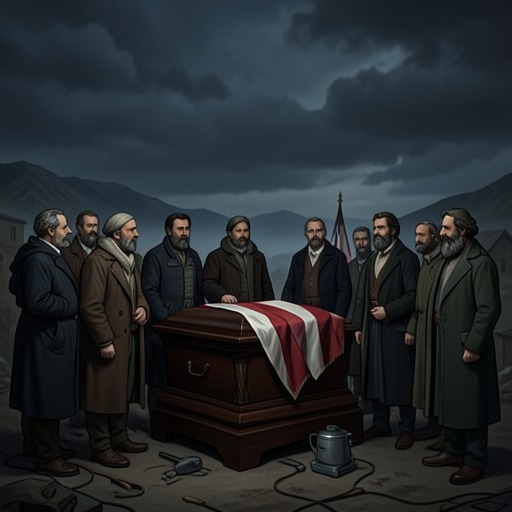
Later, Sergey Sergeyich learns from a Tatar man that Akhtem’s body has been found buried in the woods and that he was killed long ago. This is the first direct confirmation of Akhtem’s death in the events recounted here. The discovery resolves the central uncertainty about whether he survived, but the account does not supply a fuller explanation of where or when he was killed, who killed him, or how the remains were located.
When Sergey Sergeyich offers condolences, Aisylu thanks him for travelling to Simferopol, saying that Akhtem would not have been returned if he had not gone. Sergey Sergeyich replies that the officials already knew and tells her that the FSB official had called her a widow. The exchange links his visit and the official’s remark to the return of Akhtem’s body, while stopping short of establishing exactly how the visit affected the decision. The family receives Akhtem back only after a long period of absence, and confirmation arrives through a returned body rather than an account of the disappearance.
Significance
The case is shaped by the gap between disappearance, official knowledge, and what a family can prove. Aisylu has a witness’s account of the men being taken, yet no answer about their destination; an official refers to her as a widow, then retracts the word; and only later does the discovery of Akhtem’s body confirm what Sergey Sergeyich had inferred. Each new piece of information narrows uncertainty without providing a complete account of responsibility.
For Sergey Sergeyich, the disappearance is not only an instance of political violence affecting someone he once knew. It also becomes a test of his ability to act: when he blurts out that the men cannot be taken, he recognizes that the words are powerless, but he nevertheless goes to Simferopol seeking information. Aisylu’s gratitude connects that effort to the return of her husband’s body. The episode presents enforced disappearance as a condition that continues after the moment of abduction: the family’s waiting, the absence of dependable answers, and the eventual return of the dead all belong to the same unresolved history.